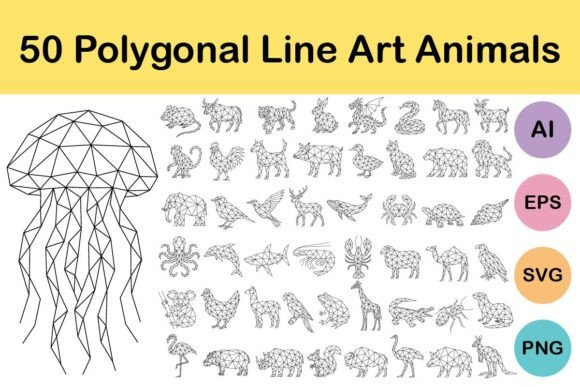
50 Polygonal Line Art Animals
When I first opened the folder for 50 Polygonal Line Art Animals, I wasn't just looking at a collection of graphics; I was mentally mapping out how these shapes would translate into thread. As a designer who spends hours troubleshooting stitch density and evaluating fabric texture, my first impression is crucial. This set doesn't scream "loud and proud" like traditional cartoon embroidery files. Instead, it whispers with a modern, architectural elegance. The mood is crisp, contemporary, and incredibly versatile, leaning heavily into the geometric aesthetic that has taken over high-end boutique branding and minimalist nursery decor.
The visual personality of 50 Polygonal Line Art Animals is defined by its sharp angles and clean lines. Unlike soft, watercolor-style illustrations that can sometimes look muddy when stitched, this design relies on the precision of straight lines and distinct polygons. It feels like a digital vector drawing waiting to be brought to life on cloth. For an embroidery designer, this is a double-edged sword. The style promises a very professional, finished product, but it demands absolute accuracy in digitization to avoid jagged edges or lost details during the stitching process.
From Screen to Stitch: A Real-World Scenario
Let's imagine a real project. You are preparing a custom order for a local coffee shop owner who wants branded aprons for her staff. She specifically asked for something unique—not the standard floral vine or the generic coffee bean clipart everyone else uses. She wants something that matches her shop's modern, industrial interior design. This is where 50 Polygonal Line Art Animals becomes a game-changer.
I envision taking a stylized fox or bear from this collection and placing it on the chest of a heavyweight cotton canvas apron. The polygonal style works beautifully here because the sharp lines mimic the metal fixtures and wood grain of the shop's decor. When stitched with a high-quality rayon thread, the flat surfaces of the polygons catch the light differently than a fill stitch, creating a subtle depth that looks expensive. The customer wouldn't just see an animal; they would see a piece of art that elevates their entire brand identity.
Similarly, consider a small business owner making personalized baby onesies. Parents today often prefer gender-neutral, sophisticated designs over loud, colorful characters. A simple, geometric lion head embroidered in a single color or a two-tone palette on a cream-colored organic cotton shirt fits perfectly. The Illustrations within this set offer that perfect balance of cute and cool, ensuring the finished product remains timeless rather than trendy.
Performance in Diverse Embroidery Situations
The versatility of 50 Polygonal Line Art Animals extends far beyond aprons and baby clothes. Because the design is essentially line art, it adapts well to various custom apparel items. On a tote bag, the clean lines cut through the woven texture of the canvas without getting lost. On a sweatshirt, the geometric shapes provide a structured contrast to the soft fleece background.
For crafters selling on Etsy or at craft fairs, this design offers immense value. It allows you to create cohesive collections. Imagine a "Jungle Series" where every item—pillow covers, tea towels, and patches—features a different animal from this specific polygonal set. The consistency in style creates a strong brand presence that customers recognize instantly. It transforms a random assortment of handmade goods into a curated boutique line.
However, we must address the technical reality of converting Graphics into a machine embroidery design. The success of this project hinges on how the file is prepared. If the original lines are too thin, the running stitch used to outline them might break easily or look sparse. Conversely, if the polygons are filled with dense fill stitch, the fabric might pucker, especially on stretchy materials like jersey knit. The design itself is a starting point; the final outcome depends entirely on your digitizing choices regarding stitch density and thread selection.
Navigating the Challenges: Where to Be Careful
While the aesthetic appeal is undeniable, there are specific scenarios where 50 Polygonal Line Art Animals requires extra caution. Small hoop sizes are a primary concern. The geometric nature of these animals often relies on negative space to define the shape. In a tiny 4x4 hoop, those delicate corners can become indistinguishable blobs of thread. If you attempt to embroider a complex wolf face in a size meant for a keychain, the detail will vanish.
Fabric choice is equally critical. Textured fabrics like terry cloth or heavy denim can obscure the fine lines of the artwork. Similarly, stretchy fabrics present a risk. If the design includes long, continuous lines across a stretchy area like a cap brim or a fitted hat, the tension of the fabric stretching over time could distort the geometry, turning a perfect triangle into a wobbly shape. Dark fabrics also pose a challenge; unless you use a high-contrast thread color, the subtlety of the line art might get swallowed up by the background.
Furthermore, products that undergo frequent washing, such as kitchen towels or work shirts, need robust construction. If the design relies on loose running stitches for definition, the threads may fray after several wash cycles. In these cases, converting the lines to satin stitch or adding a slightly denser fill can ensure durability, though this changes the original artistic intent.
Impact on Visual Appeal and Customer Trust
In the world of handmade commerce, perception is everything. A poorly executed embroidery job can make a personalized gift feel cheap, regardless of the quality of the fabric. 50 Polygonal Line Art Animals, when executed correctly, signals professionalism. The sharp, clean edges suggest that the maker cares about precision. This builds trust with the buyer, who associates the neatness of the stitches with the reliability of the product.
The design also enhances brand consistency. Whether you are creating a logo for a clothing line or a decorative element for a scrapbook page, the consistent geometric language ties everything together. It allows for easy recognition across different mediums, from physical tags to digital mockups. Customers appreciate this cohesion, and it often leads to repeat business and higher perceived value for your handmade product.
Practical Notes for the Designer
Before you commit this design to your production line, there are essential steps you must take. First, always test the design on scrap fabric that matches your final material. Check how the thread colors interact with the fabric texture under natural lighting. What looks vibrant on a monitor might appear dull on linen.
Review the stitch density carefully. If the design calls for a lot of satin stitch in tight corners, you may need to adjust the angle or reduce the width to prevent thread breaks. Confirm your hoop size relative to the design dimensions; don't try to force a large design into a small hoop without resizing. Inspect the small details, particularly the inner corners of the polygons, to ensure they won't collapse during stitching.
It is also wise to test the design in black and white mockups. This helps you visualize the contrast without the distraction of color. Compare how it looks on both light and dark backgrounds to ensure the design pops. Use proper stabilizer to support the fabric, especially if you are working with lightweight materials or complex curves. Finally, verify the licensing terms. Ensure that you have the right to sell finished items made from these digital embroidery files if you intend to use them for commercial projects. Do not assume the license covers all uses without checking.
Ultimately, 50 Polygonal Line Art Animals is more than just a collection of images; it is a toolkit for modern designers. It bridges the gap between digital precision and tactile craftsmanship. By understanding its strengths and limitations, you can transform simple polygons into stunning, market-ready pieces that stand out in a crowded marketplace. Whether you are a seasoned pro or a hobbyist just starting your craft business, this set offers a fresh perspective on what embroidery can achieve.