Barista Coffee Tools Clipart Review
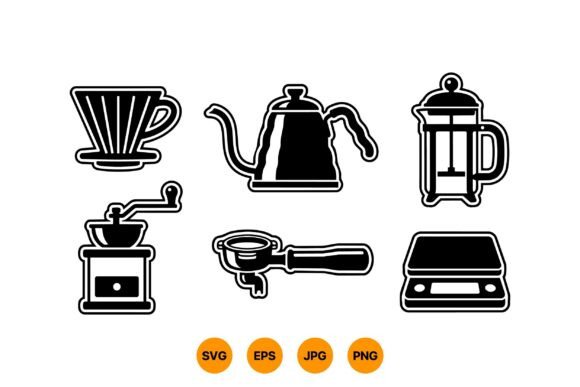
When I first opened the folder for Barista Coffee Tools Clipart, I didn't just see a collection of images; I saw a potential bestseller waiting to happen. As someone who has spent years testing embroidery files on everything from delicate baby onesies to heavy-duty aprons, my first instinct is always practical: does this design actually hold up under the needle? The description promises a bold outline vector sticker set depicting minimalist coffee tools, and that "bold" descriptor is exactly what caught my eye. In a sea of overly detailed, cluttered floral patterns and cursive fonts, there is something refreshingly honest about a clean, graphic approach.
The mood this design creates is immediate and energetic. It feels playful yet professional, striking a balance that is rare in digital graphics. These aren't just random doodles; they are functional representations of brewing and espresso tools. For a designer looking to build a brand identity or create a cohesive line of merchandise, this visual personality is gold. It suggests a modern cafe vibe without being cheesy. When you look at the layout, it feels ready to be scaled, which is the most critical factor when transitioning from a screen to a piece of fabric.
From Screen to Stitch: A Real-World Scenario
Let me take you through a specific project I had in mind when evaluating these graphics. Imagine you are an Etsy seller preparing for the holiday rush. You have a client who owns a small, independent coffee shop and wants a custom embroidered tote bag as a promotional gift for their VIP customers. They want something that screams "coffee lover" but avoids the cliché mugs with hearts. This is where Barista Coffee Tools Clipart becomes the hero.
I envisioned stitching this onto a canvas tote bag using a high-contrast thread color against a dark navy background. Because the original vector is a bold outline, the machine embroidery translation would rely heavily on satin stitch to define those crisp edges. The result would be a sharp, legible graphic that looks just as good stitched on a thick canvas as it does on a smooth cotton blend. Unlike intricate illustrations that might lose detail in the stitching process, these minimalist tools maintain their integrity. The customer wouldn't just receive a bag; they would receive a piece of branded art that elevates the perceived value of their daily commute item.
This same logic applies if you are making sweatshirt embroidery for a local barista team or creating personalized gifts for a wedding shower with a coffee theme. The clean lines ensure that the design remains recognizable even after hours of wear and washing. It transforms a simple garment into a statement piece that signals community and craft.
Where This Design Shines in Embroidery Projects
The versatility of this file makes it suitable for a wide range of embroidery projects. If you are a small business owner, you can easily integrate these graphics into your product line without needing to hire a new illustrator. Here is how I see them performing across different categories:
- Custom Apparel: On t-shirts and hoodies, the bold outlines prevent the design from getting lost in the fabric weave. It works exceptionally well as a chest logo or a back print.
- Tote Bag Design: Canvas is a forgiving fabric, and the strong shapes of the coffee tools stand out beautifully here. It adds a touch of boutique branding to any carry-all.
- Baby Embroidery: While the theme is adult-oriented, the simplicity makes it perfect for nursery decor or a "little barista" baby outfit. The lack of tiny, fiddly details means it won't snag or fray easily.
- Applique Design: Because the shapes are distinct and bold, this illustrations set could also be adapted for applique work, adding texture and depth to kitchen towels or caps.
- Commercial Embroidery: For decorators working on bulk orders, the consistency of the design ensures that every finished product looks uniform and professional.
These design assets are not just pretty pictures; they are functional tools for your creative business. Whether you are selling digital embroidery files or physical goods, having a versatile graphic like this allows you to tap into the massive coffee culture market.
Points of Caution: Where to Think Twice
However, no design is perfect for every situation, and as a reviewer, I need to be realistic about where Barista Coffee Tools Clipart might struggle. The boldness that makes it great for large prints can sometimes be a limitation in tight spaces.
If you are working with a small hoop size, such as those used for socks or very small patches, you must be careful. While the lines are clean, reducing the scale too much can cause the threads to merge, turning distinct coffee tools into a solid blob. Similarly, if you attempt to use this on stretchy fabric without proper stabilization, the tension of the satin stitch could pucker the material, ruining the crisp aesthetic of the design.
Textured fabrics, like chunky knits or boucle, present another challenge. The definition of the outline relies on a relatively smooth surface to show off the contrast. On a rough texture, the stitches might get buried, losing the playful personality of the original vector. Additionally, if you are planning to embroider this on a curved surface like a cap, the distortion of the curves needs to be accounted for in the digitizing process. If the file isn't already optimized for curved surfaces, you may need to adjust the pathing manually.
Another area to watch is stitch density. If the original artist intended this as a fill-heavy design, it might be too dense for lightweight fabrics like silk or thin cotton. Always check the file settings before running a production batch. If the density is too high, the fabric will become stiff and uncomfortable, which is a recipe for unhappy customers.
Practical Designer Notes for Success
Before you commit this design to a commercial product, there are a few steps every experienced maker should take. First, always test the embroidery file on scrap fabric that matches your final material. This helps you gauge how the thread colors interact with the fabric texture. Do the outlines pop enough? Is the contrast sufficient?
Review the stitch density carefully. If the design includes areas of fill stitch, ensure they aren't so thick that they distort the shape of the coffee tools. Inspect the small details, especially if you plan to include any text alongside the graphics. Tiny lettering often fails in embroidery unless the font is specifically designed for it.
It is also wise to create black and white mockups to see how the design translates to a monochrome version. Sometimes, color hides structural flaws that become obvious in grayscale. Furthermore, confirm whether the licensing terms allow for commercial embroidery projects. Many digital products come with restrictions on how many items you can sell, so reading the fine print is essential for protecting your business.
Finally, consider the end-user experience. Will this finished product withstand frequent washing? Bold outlines generally fare well, but checking the stability of the stitches on a wash test is crucial for building trust with your buyers. A design that fades or frays quickly damages your reputation, while one that stays sharp reinforces the quality of your handmade goods.
In conclusion, Barista Coffee Tools Clipart offers a solid foundation for a variety of creative endeavors. Its minimalist charm and bold structure make it a reliable choice for anyone looking to add a touch of coffee culture to their handmade product line. Just remember to respect the limitations of the medium, test thoroughly, and let the design do the heavy lifting in your next big project.