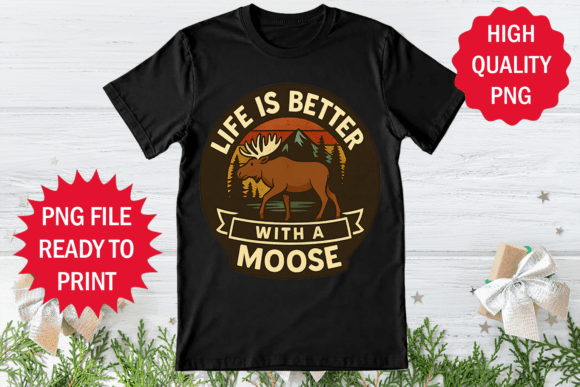
Life is Better with a Moose T-shirt Png: A Designer's Real-World Review
When I first opened the Life is Better with a Moose T-shirt Png, my initial reaction wasn't about the file size or the pixel count. It was about the mood. There is a distinct energy in this piece that immediately suggests outdoor adventures, cozy cabin vibes, and a touch of rustic charm. As an experienced designer who has stitched thousands of designs for clients ranging from local boutiques to large-scale commercial operations, I look for more than just a pretty image. I need to know if it will hold up under the needle, how it translates from a screen to a physical garment, and whether it adds value to a handmade product.
This graphic falls squarely into the T-Shirt Designs category, but its versatility extends far beyond a simple cotton tee. The prompt describes it as a colorful graphic suitable for sublimation, yet for us embroidery artists, the question is always: does this translate well to thread? The layout feels balanced, and the typography appears sturdy enough to withstand the tension of a satin stitch without losing legibility. It screams "handmade" rather than "mass-produced," which is exactly what today's market demands.
From Screen to Stitch: The Real Project Test
To truly understand the potential of Life is Better with a Moose T-shirt Png, I like to visualize it in a real-world scenario. Imagine I am preparing a custom order for a boutique owner who specializes in eco-friendly, nature-inspired goods. They need a design for a line of heavy-duty canvas tote bags intended for farmers' markets. This design fits that niche perfectly.
However, moving from a digital mockup to a stitched tote bag requires careful consideration. If I were to use this as a primary element on a canvas tote, the texture of the fabric would interact beautifully with the fill stitches of the moose illustration. The natural fibers of the canvas would soften the edges of the design, giving it that authentic, artisanal look that customers love. But here is where practical judgment comes in: the background color of the bag matters immensely. Since the description mentions a colorful graphic, placing it on a dark navy or forest green canvas could create a stunning contrast, provided the thread colors are vibrant enough to pop against the deep background.
Conversely, consider a baby item project. A soft onesie or a nursery pillow cover could benefit from the whimsical nature of this design. The phrase "Life is Better" resonates strongly with parents looking for personalized gifts. In this context, the design acts as a centerpiece. When stitching on delicate baby fabrics, however, the density of the machine embroidery design becomes critical. If the original vector is too dense, it might make the fabric stiff, ruining the comfort of a baby garment. This is why testing on scrap fabric is non-negotiable before running a full production run.
Navigating Fabric and Hoop Challenges
Not every surface is created equal, and Life is Better with a Moose T-shirt Png has specific strengths and weaknesses depending on where you apply it. For instance, applying this to a curved surface like a baseball cap presents a unique challenge. While the design looks great flat, the curvature of a cap can distort lettering if the digitization isn't precise. If the text is too small or the spacing too tight, the curves of the cap might cause the letters to merge or stretch awkwardly during the stitching process.
Similarly, textured fabrics like fleece sweatshirts or thick denim jackets offer a different set of variables. On a sweatshirt, the pile of the fabric can hide fine details. If the design relies on intricate lines or tiny decorative accents, they might get lost in the fuzziness of the material. In such cases, simplifying the design or increasing the size of the elements is often necessary to ensure clarity. The same applies to thin fabrics; if the stitch density is too high, the fabric might pucker, leading to an unprofessional finish that could damage customer trust.
I also want to highlight the importance of hoop size. If you plan to use this design for a small embroidered patch or a detail on a kitchen towel, you must ensure the design fits within your smallest hoop comfortably. Pushing a design that is meant for a chest print into a 4x4 inch hoop can result in cropped elements or stretched proportions. Always check the dimensions of the embroidery file relative to your intended project area.
Elevating Product Value and Brand Consistency
For Etsy sellers and small business owners, the visual appeal of a finished product is directly tied to sales. A well-executed Life is Better with a Moose T-shirt Png can significantly boost the perceived value of a handmade product. When a customer sees a crisp, clean embroidery job on a hoodie or a mug, they perceive the item as higher quality and worth a premium price. The cohesive look of the design helps establish brand consistency across different items, whether it's a banner, a poster, or a sticker.
The design's versatility allows for creative cross-promotion. You could use the same graphic on a matching set of aprons and tea towels for a kitchen-themed gift set, or on a combination of hats and t-shirts for a craft fair booth. This uniformity creates a strong visual identity that makes your shop memorable. Furthermore, when creating printable mockups for your online listings, using a realistic rendering of this design on various backgrounds can help potential buyers visualize the final product, reducing hesitation and increasing engagement.
Practical Notes for the Embroidery Designer
Before you commit to a large batch of orders, there are several technical steps you should take to ensure success. First and foremost, test the design on scrap fabric that matches your final project material. This will reveal any issues with puckering, thread breakage, or color clashes that aren't obvious on a computer screen.
Pay close attention to thread colors. Since the source is a colorful graphic, you need to decide if you want to replicate those exact hues in thread or simplify them for better stitch coverage. Sometimes, a limited palette works better in embroidery than a complex gradient. Check the stitch density of the fill areas; if it is too high, the fabric may become rigid, especially on lighter materials. Conversely, if it is too low, the underlying fabric might show through, looking unfinished.
Don't forget to inspect small details. Tiny lettering or fine lines in the moose illustration might not render well on certain fabrics or with certain thread types. If the design includes very small text, consider enlarging it slightly to maintain readability. Also, verify the licensing terms before selling finished items. Ensure that the digital embroidery file allows for commercial use on physical products, as this varies by creator.
Finally, consider the washability of your finished product. Embroidery on items like tote bags or kitchen towels that undergo frequent washing needs to be secure. Proper stabilizer usage is key here. Using the right type of cut-away or tear-away stabilizer ensures that the design remains stable even after multiple wash cycles, preserving the integrity of the finished product.
In conclusion, Life is Better with a Moose T-shirt Png offers a fantastic foundation for a wide range of embroidery projects. Whether you are crafting personalized gifts, building a craft business, or designing for a client, this design brings a sense of warmth and authenticity that resonates with audiences. By paying attention to fabric choice, stitch settings, and proper preparation, you can transform this digital asset into a tangible masterpiece that stands out in any marketplace.